Learning Outcomes
1. Introduction to OSHA and Occupational Safety Standards (10 Hours)
Learning Outcomes:
- Understand the role and functions of OSHA in maintaining workplace safety.
- Demonstrate knowledge of OSHA regulations and standards across various industries.
- Understand OSHA inspection processes and how they ensure compliance with safety standards.
- Identify key OSHA standards applicable to general industry and construction.
2. Hazard Identification and Risk Assessment (10 Hours)
Learning Outcomes:
- Identify potential workplace hazards (physical, chemical, ergonomic, biological).
- Conduct risk assessments to evaluate the severity and likelihood of risks.
- Prioritize risks and recommend mitigation strategies to minimize workplace hazards.
- Apply risk control methods to ensure the safety of employees and compliance with OSHA regulations.
3. Personal Protective Equipment (PPE) (10 Hours)
Learning Outcomes:
- Understand the importance of PPE in reducing workplace injuries and illnesses.
- Identify various types of PPE (e.g., eye, ear, respiratory, and head protection).
- Demonstrate the proper selection, usage, maintenance, and storage of PPE.
- Educate employees on correct PPE usage to enhance safety practices.
4. Fire Safety and Emergency Response (10 Hours)
Learning Outcomes:
- Understand fire hazards and how to implement preventive measures.
- Identify the types of fire extinguishers and suppression systems used in workplaces.
- Develop and practice emergency response and evacuation plans for various types of emergencies.
- Ensure workers are trained in fire safety and emergency response procedures.
5. Electrical Safety and Lockout/Tagout (LOTO) Procedures (15 Hours)
Learning Outcomes:
- Identify electrical hazards and their potential risks in the workplace.
- Understand the principles of Lockout/Tagout (LOTO) and its role in electrical safety.
- Apply OSHA’s Lockout/Tagout procedures to prevent injuries related to electrical hazards.
- Conduct routine inspections of electrical systems to ensure safety compliance.
6. Chemical Safety and Hazard Communication (HAZCOM) (15 Hours)
Learning Outcomes:
- Understand the principles of chemical safety in the workplace.
- Explain OSHA’s Hazard Communication (HAZCOM) standard and how to implement it.
- Interpret Material Safety Data Sheets (MSDS) and label hazardous chemicals correctly.
- Conduct training programs for employees on chemical hazards and proper handling procedures.
7. Ergonomics and Prevention of Musculoskeletal Disorders (MSDs) (15 Hours)
Learning Outcomes:
- Identify ergonomic risks and their impact on workers’ health.
- Develop and implement solutions to reduce musculoskeletal disorders (MSDs).
- Educate employees on proper posture, lifting techniques, and workstation setup.
- Apply ergonomic principles to improve worker comfort and reduce injury risks.
8. Machine Guarding and Equipment Safety (10 Hours)
Learning Outcomes:
- Identify common machine hazards and understand the importance of proper machine guarding.
- Implement machine guarding strategies to prevent accidents and injuries.
- Conduct equipment safety inspections to ensure machines are safe to operate.
- Train workers on safe operation practices and the importance of maintaining equipment safety.
9. Incident Reporting, Investigation, and Root Cause Analysis (15 Hours)
Learning Outcomes:
- Understand the process of reporting workplace incidents and near misses.
- Conduct thorough investigations into workplace accidents to determine their root causes.
- Apply root cause analysis techniques to prevent the recurrence of similar incidents.
- Develop and implement corrective actions based on incident findings to improve safety.
10. Workplace Environmental Safety and Hazardous Waste Management (15 Hours)
Learning Outcomes:
- Identify environmental hazards in the workplace, such as air and water pollution, and how they impact safety.
- Understand OSHA and EPA standards related to environmental protection in the workplace.
- Implement procedures for the safe handling, storage, and disposal of hazardous waste.
- Develop workplace policies to ensure environmental safety and reduce risks related to hazardous materials.
11. Safety Auditing and Compliance Inspections (15 Hours)
Learning Outcomes:
- Understand the importance of safety audits in maintaining workplace compliance.
- Learn how to conduct comprehensive safety inspections to identify potential hazards.
- Develop audit checklists and tools for assessing compliance with OSHA regulations.
- Write clear and actionable audit reports, recommending corrective actions where necessary.
12. Creating a Safety Culture and Employee Training (15 Hours)
Learning Outcomes:
- Understand the key elements of a strong workplace safety culture.
- Develop strategies to promote a safety-first mindset among all employees.
- Create and deliver effective safety training programs to employees at all levels.
- Engage employees in safety initiatives and encourage their active participation in workplace safety.
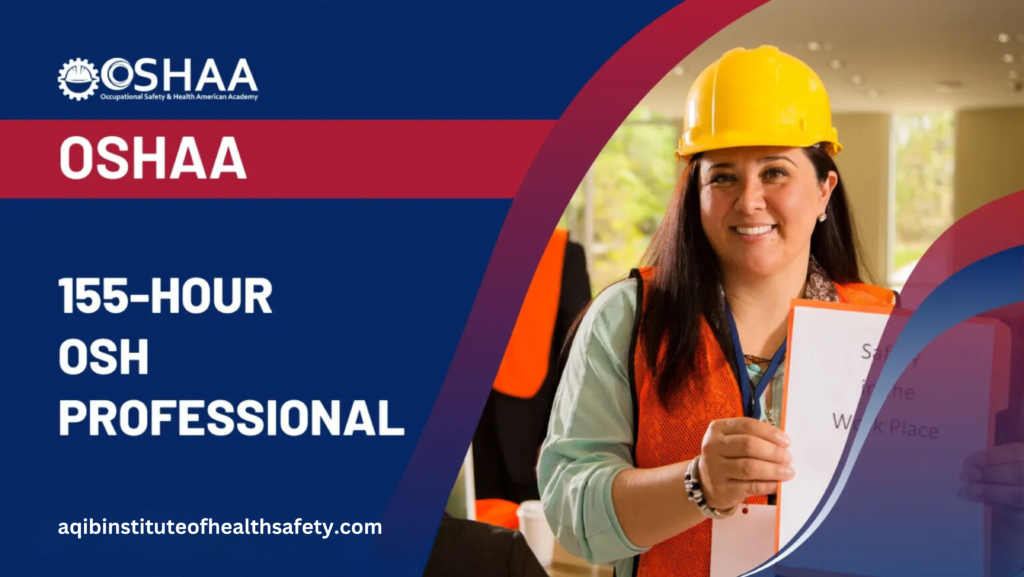
Upon completing the OSHA 155-Hour OSH Professional Course, participants will have a well-rounded understanding of workplace safety, risk management, and compliance with OSHA regulations. These learning outcomes ensure that graduates are prepared to manage safety protocols effectively, promote a culture of safety, and reduce workplace incidents across various industries.